


The Realm at a Glance
- Territory
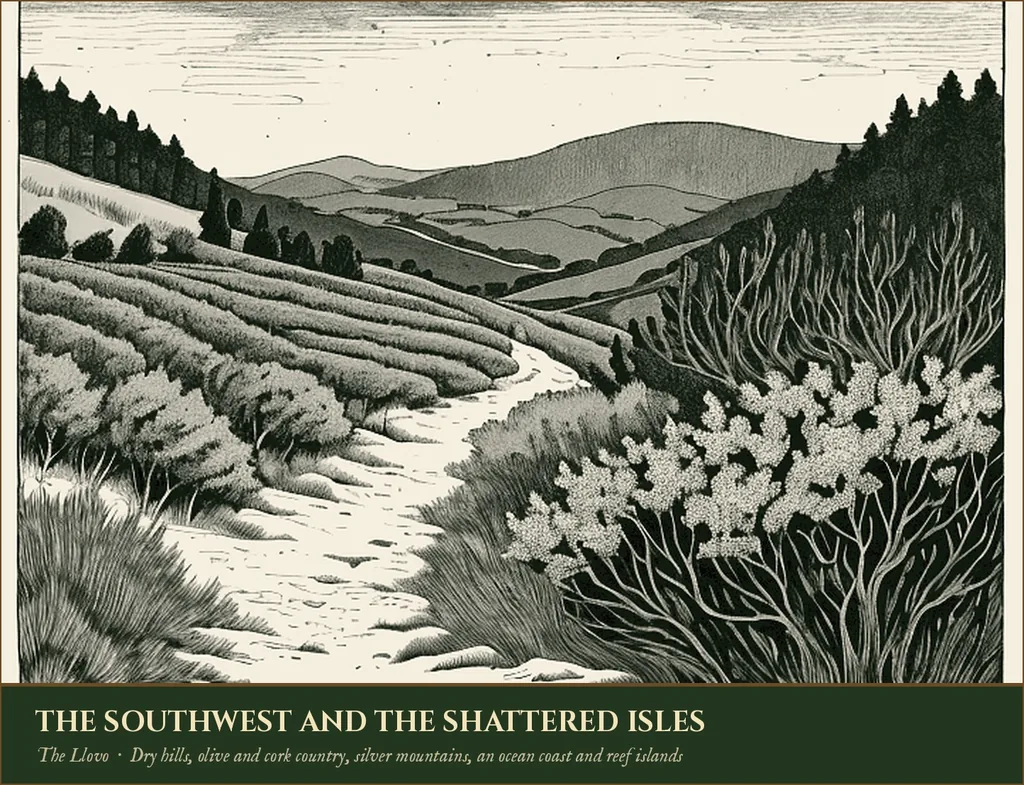
- The southwest: sun-baked hills, olive groves, vineyards, the valley of the River Llovo, silver mountains, and a long ocean coast.
- Capital
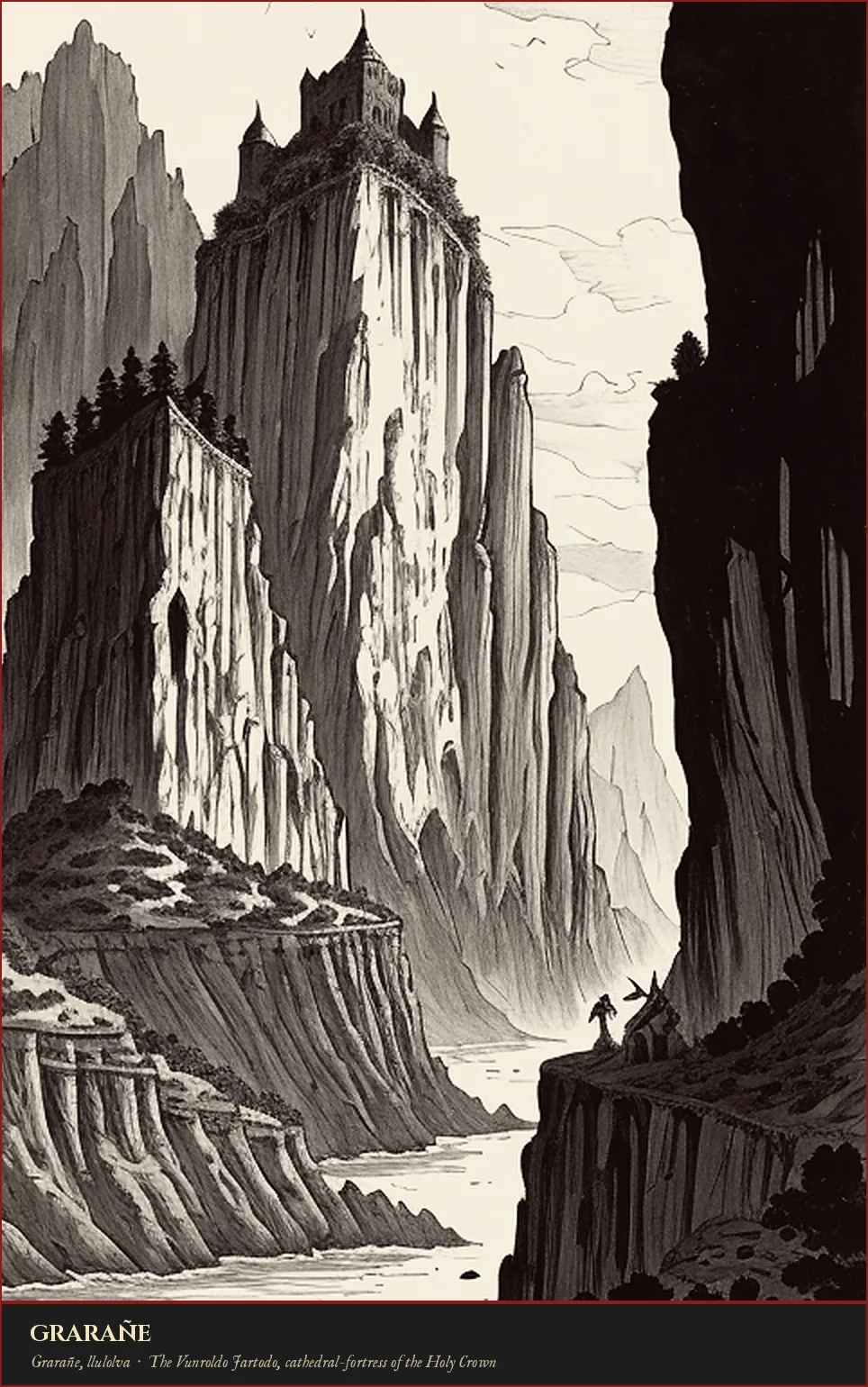
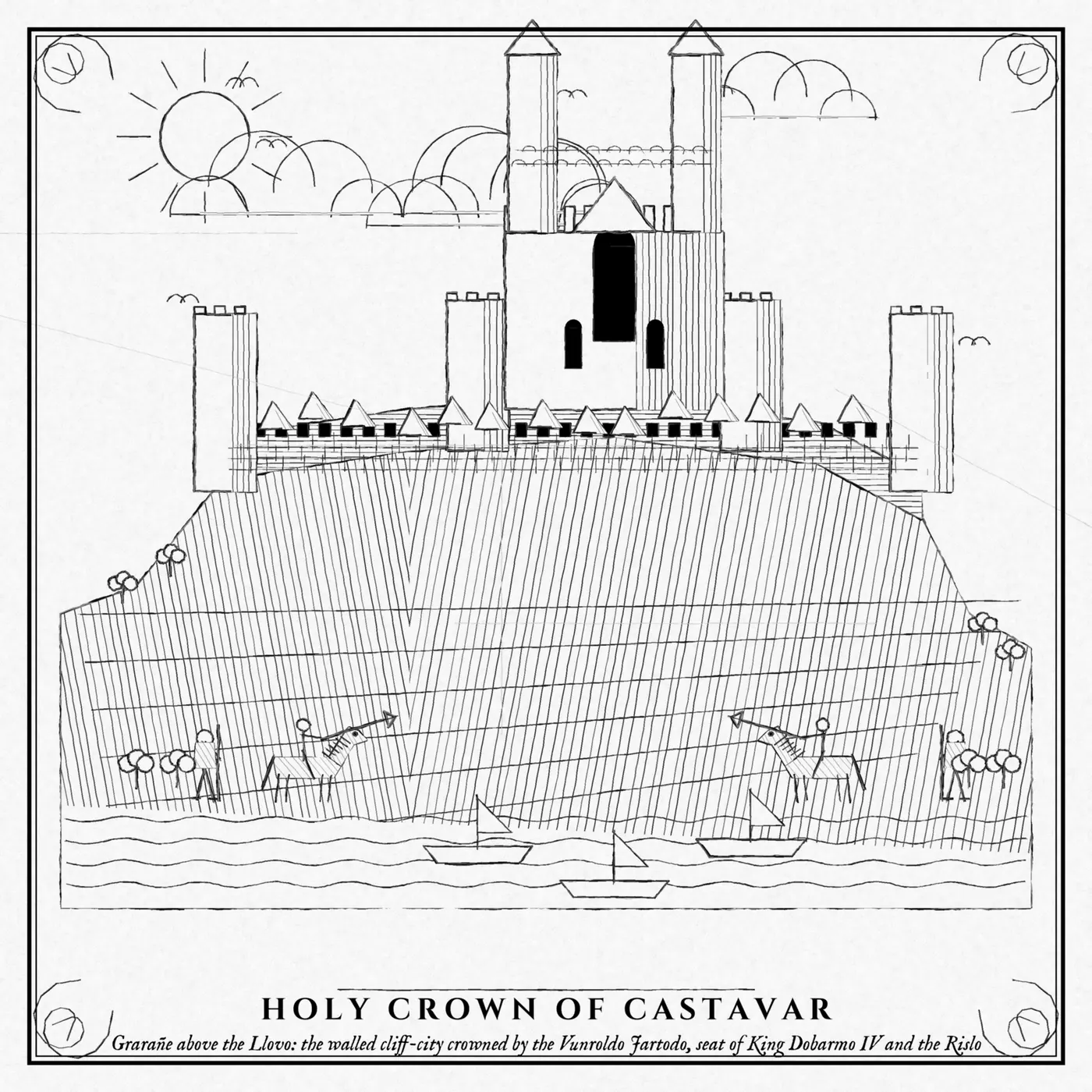
- Grarañe, a fortress-city on a cliff above the Llovo, crowned by the great cathedral-fortress, the Vunroldo Jartodo.
- Other cities
- Tandosa (the navy's home), Tinoda, Sonvera, Puesdro.
- Government
- A feudal crown bound up with the church. The king rules with the Grandees (dukes, counts and marquesses), and below them stand the lesser nobility, the masesben. The Rislo of the church sits at the king's right hand and can forbid anything touching the faith, and he decides what touches the faith.
- Ruler
- King Dobarmo IV deso Grarañe (35), pious, proud, and in over his head.
- Key figures
- Rislo Litoto, the zealous head of the church, who runs the kingdom's dealings abroad in all but name; Queen Rorelle (née diol Valcroix, of Caelvenne), who reports to her uncle.
- Religion
- The Berrode of the Solitary God (Semodo). One god and no other. The church keeps fighting orders of knights, the most feared of them the Order of the White Thorn, and an inquisition, the Office of Truth. The church calls Zarvand's fire-faith idol-worship and has waged three crusades against it. It calls Caelvenne's sun-worship heresy, and puts up with it for the money.
- Economy
- Silver mines, olives, wine, cork, fine warhorses (Castavari destriers are the most prized horses in the world), shipbuilding and ocean fishing.
- Military
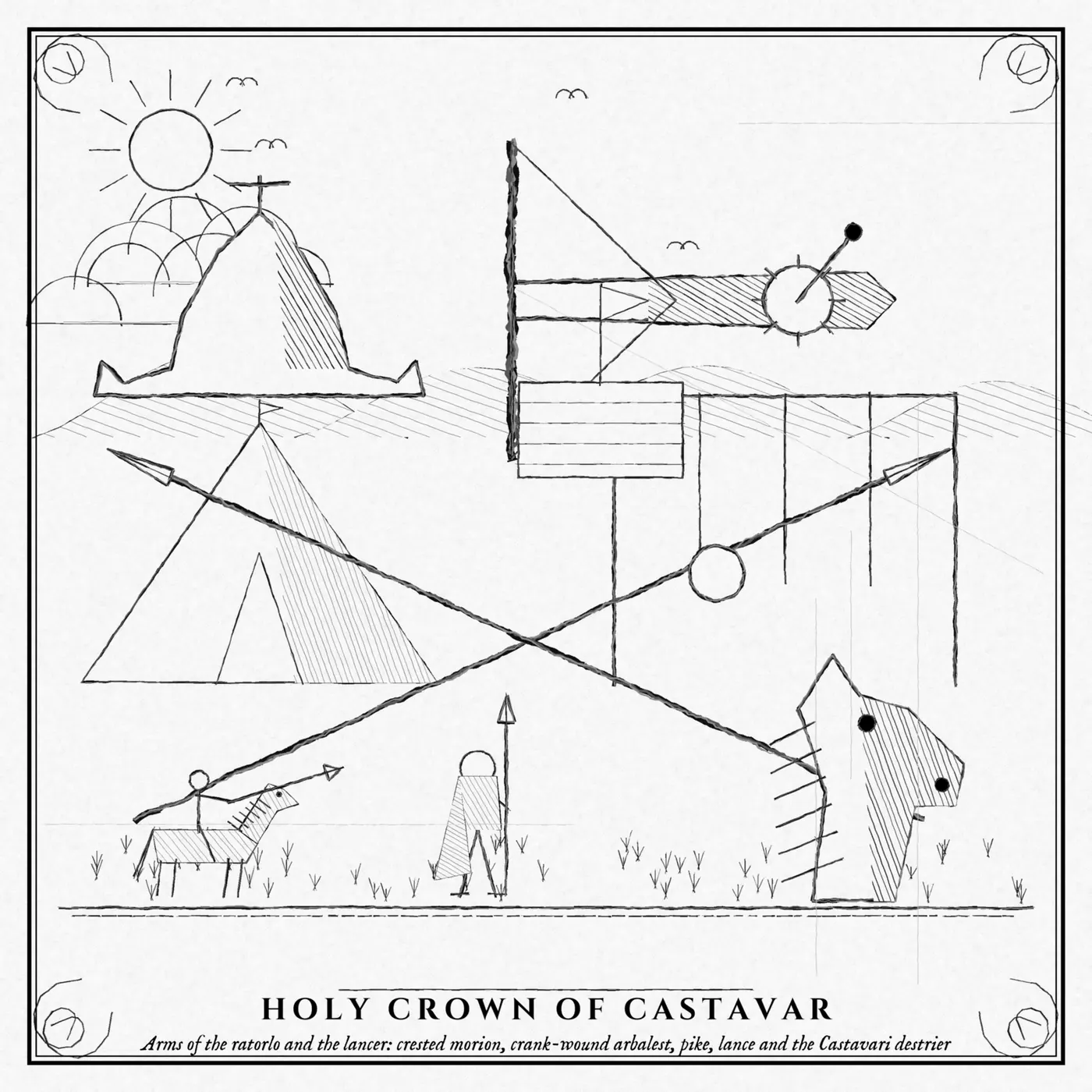
- The best heavy cavalry on the continent. Steady infantry squares of pike and heavy crossbow, called ratorlon. The only true ocean-going navy, with high-castled galleons. The knightly orders fight with the fire of the faith.
- Advanced technology
- Steel-prod heavy arbalests wound by crank; galleons with mounted bolt-throwers; siege trebuchets.
- Architecture
- Whitewashed stone, red tile roofs, courtyards, fortified cathedrals, massive curtain walls. The villages are stone and adobe.
- Currency
- Gold larrama, silver jabirga. Castavar mints more silver than anyone and still owes Caelvenne money.
- Strengths
- Picked heavy cavalry, the only real ocean navy, silver wealth, and a fighting spirit fed by faith.
- Weaknesses
- Deep debt to Caelvenne; crusade after crusade against Zarvand, bleeding men and money; an inquisition that drives off scholars and merchants; and a young king ruled by his priest.
Plates
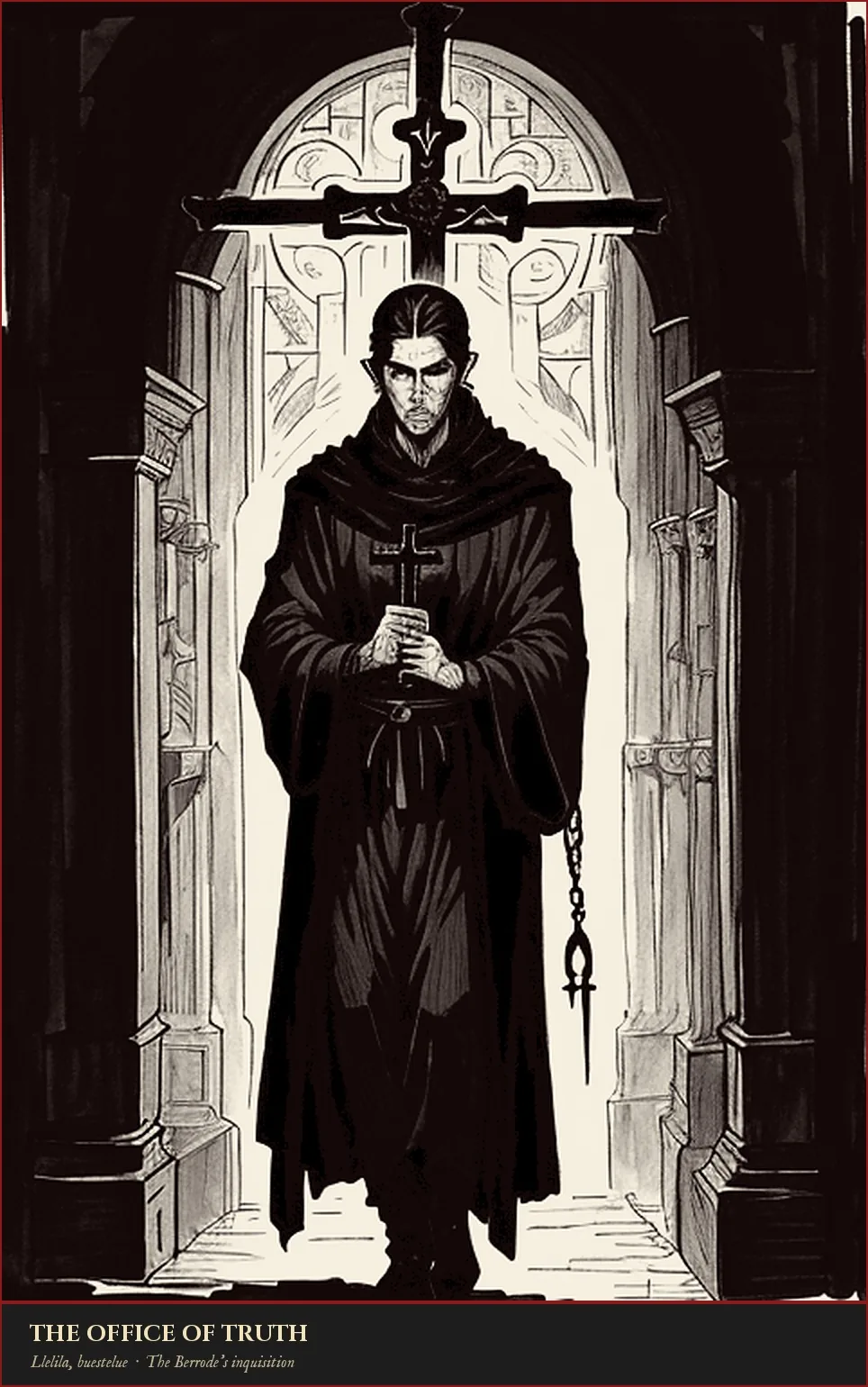
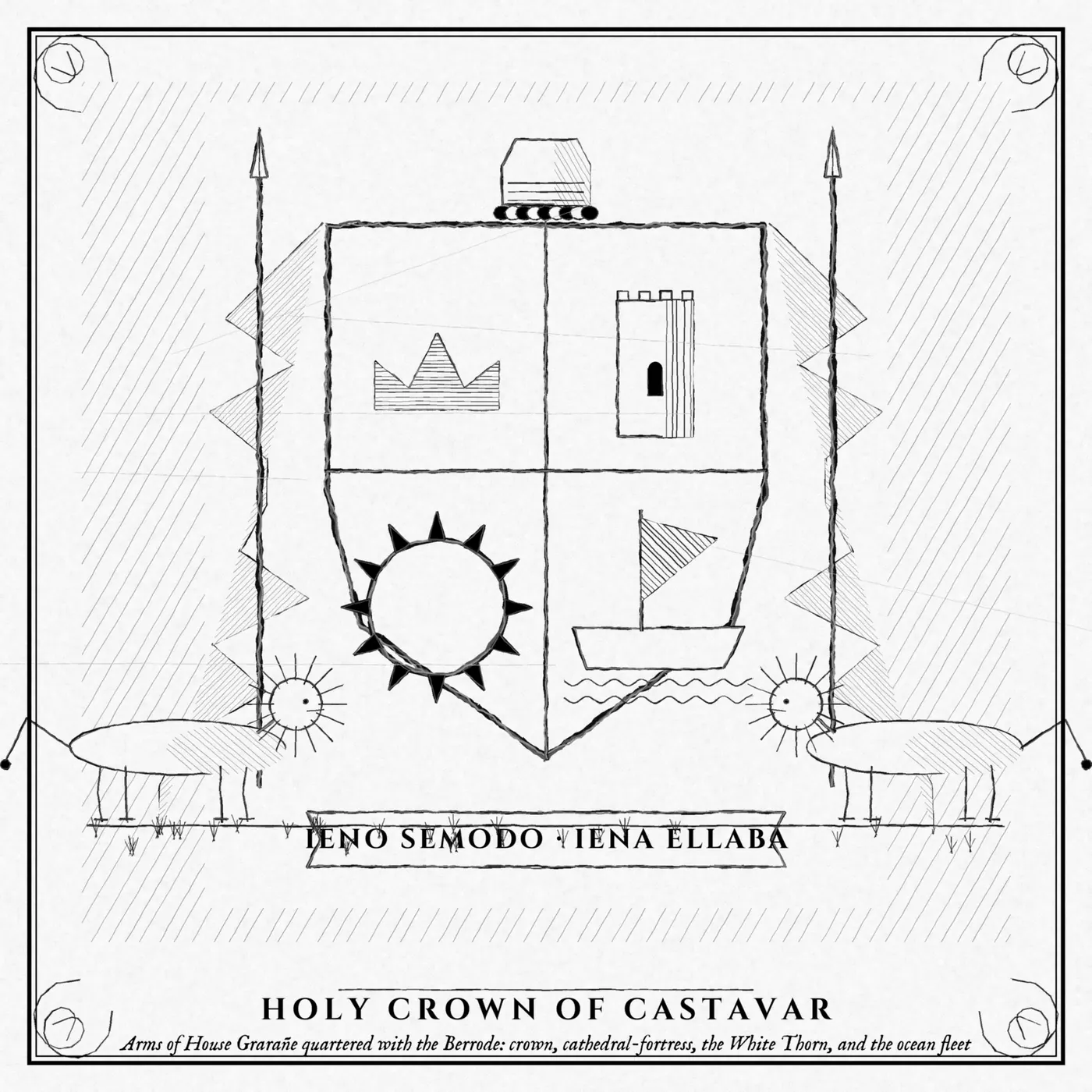
The sketchbook: crest, arms, landmark and heraldry sheets
The Land
Provinces
Royal Demesne of Grarañe
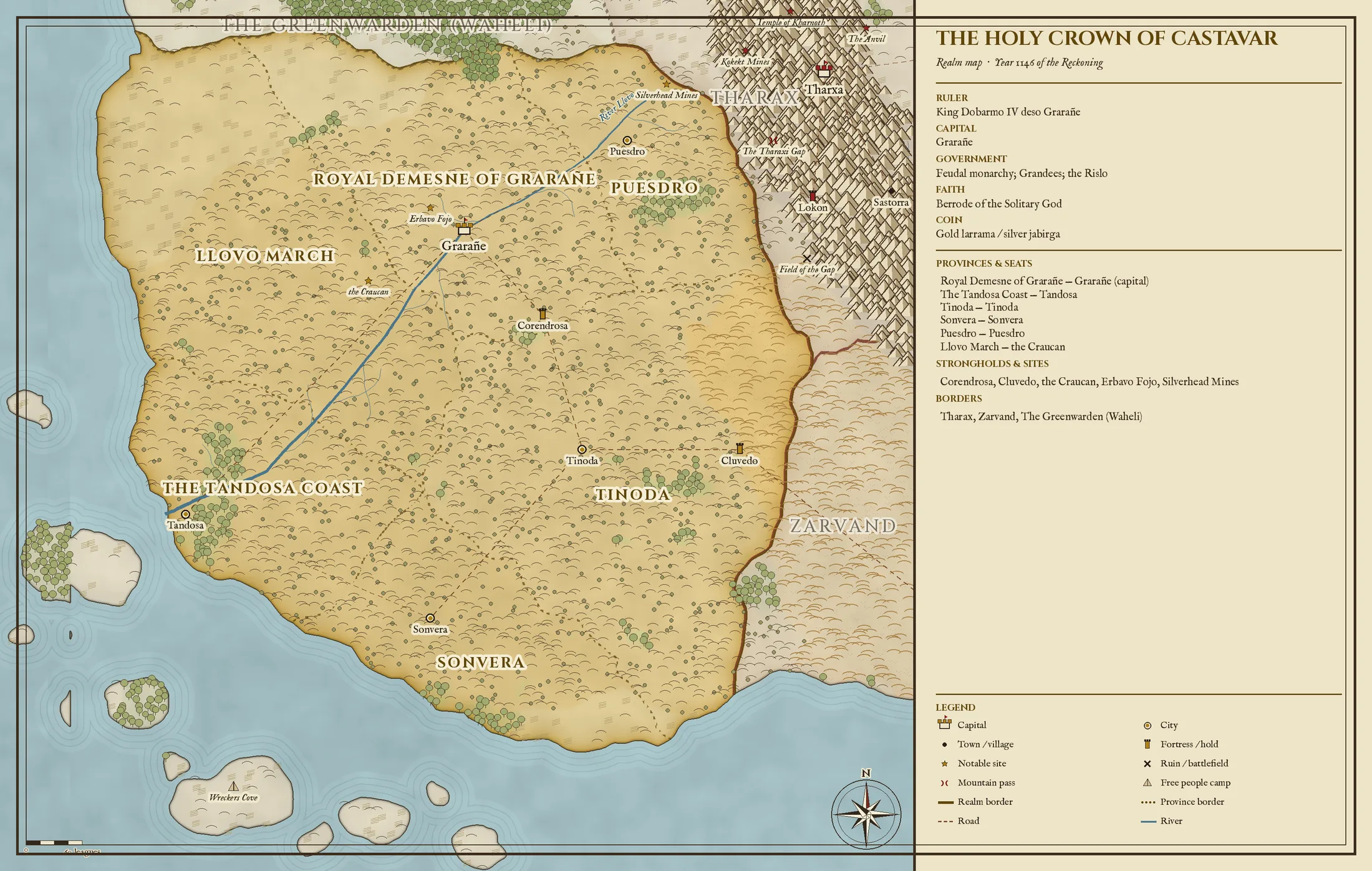
This is the crown's own land around the capital, astride the middle Llovo, and the heart of House Grarañe's power since the Twin Crowns. It holds Grarañe and the fort of Corendrosa, and the main roads of Castavar meet here: north to Puesdro and the Tharaxi Gap, and south in a ring through Tinoda, Sonvera and Tandosa.
The Tandosa Coast
Castavar's western seaboard runs around Tandosa near the mouth of the Llovo, and it is the home of the realm's navy and its fishing fleets. The coast lives on the sea: sardines salted in barrels, octopus dried on lines in every village, and the spring tuna netted offshore as a royal monopoly.
Tinoda (province)
Castavar's southeastern province surrounds the city of Tinoda and runs toward the Sunmaw frontier. It holds the fort of Cluvedo, the realm's outpost on the road to Zarvand's Daalher and Kebidaan.
Sonvera (province)
Castavar's southern coastal province surrounds the city of Sonvera. Its coastal marshes grow Sonvera rice, and its salt lagoons fill with pink flamingos.
Puesdro (province)
Castavar's northeastern province is the silver country: the mountains above Puesdro and the Silverhead Mines, which have made Castavar the largest minter of silver on the continent since 752. It borders Tharax, and the road from Grarañe to Tharxa and the Tharaxi Gap crosses it.
Llovo March
The lower Llovo valley west of Grarañe is so thick with cork oaks that it is called a forest of them, stripped for cork every nine years. Black Llovo bulls are bred here and run through the streets on the saints' days.
Voices of Castavargosnolna
King Dobarmo IV deso Grarañe
Handsome in the dark Castavari way, with the Grarañe jaw and a beard kept short. Wears his armor to prayers. A burn scar across his right palm and wrist from Talodin fire at Faashab-Talodin, where eight thousand of his men died; he wears a glove over it and takes the glove off when he prays.
Rislo Litoto
Gaunt, hawk-nosed, shaven-headed, with pale gray eyes that people describe afterward as the thing they remember. Wears rough white wool under his vestments and sleeps on a board. Does not eat meat, drink wine, or keep a mistress, and has therefore the moral authority of a man with no vices, which he uses like a whip.
Queen Rorelle diol Valcroix
Golden-haired, fine-boned, with the Valcroix trick of a face that shows nothing. Speaks Castavari perfectly with a Solvaine lilt she has never bothered to lose. Married at seventeen as the seal on the Gilded Pact; has produced two sons, both healthy, and reports to her uncle by heliograph in a cipher the Office of Truth has not broken.
Grand Master Arsoso Tirago of the White Thorn
An enormous gray-bearded knight with a face like a cliff and a voice like gravel. Missing two fingers on his left hand from a Sunmaw border skirmish in his youth. A hawthorn branch tattooed in white ink around his sword arm, the Order's mark.
Brother Talvo
Soft-spoken, soft-handed, tonsured, with a habit of touching his fingertips together and smiling before he speaks. Has never killed anyone personally. Has signed for some two hundred deaths and keeps the ledger neatly.
Captain Modarsa Tandosno
Sun-dark, salt-cracked, with a rope burn across her left palm and a ship's wheel tattooed over her heart. Daughter of a Tandosa fisherman, rose through the navy by being better than every man who tried to stop her. Has sunk four Salt Brotherhood ships and lost one of her own.
Cities and Townsmoveja
Grarañe
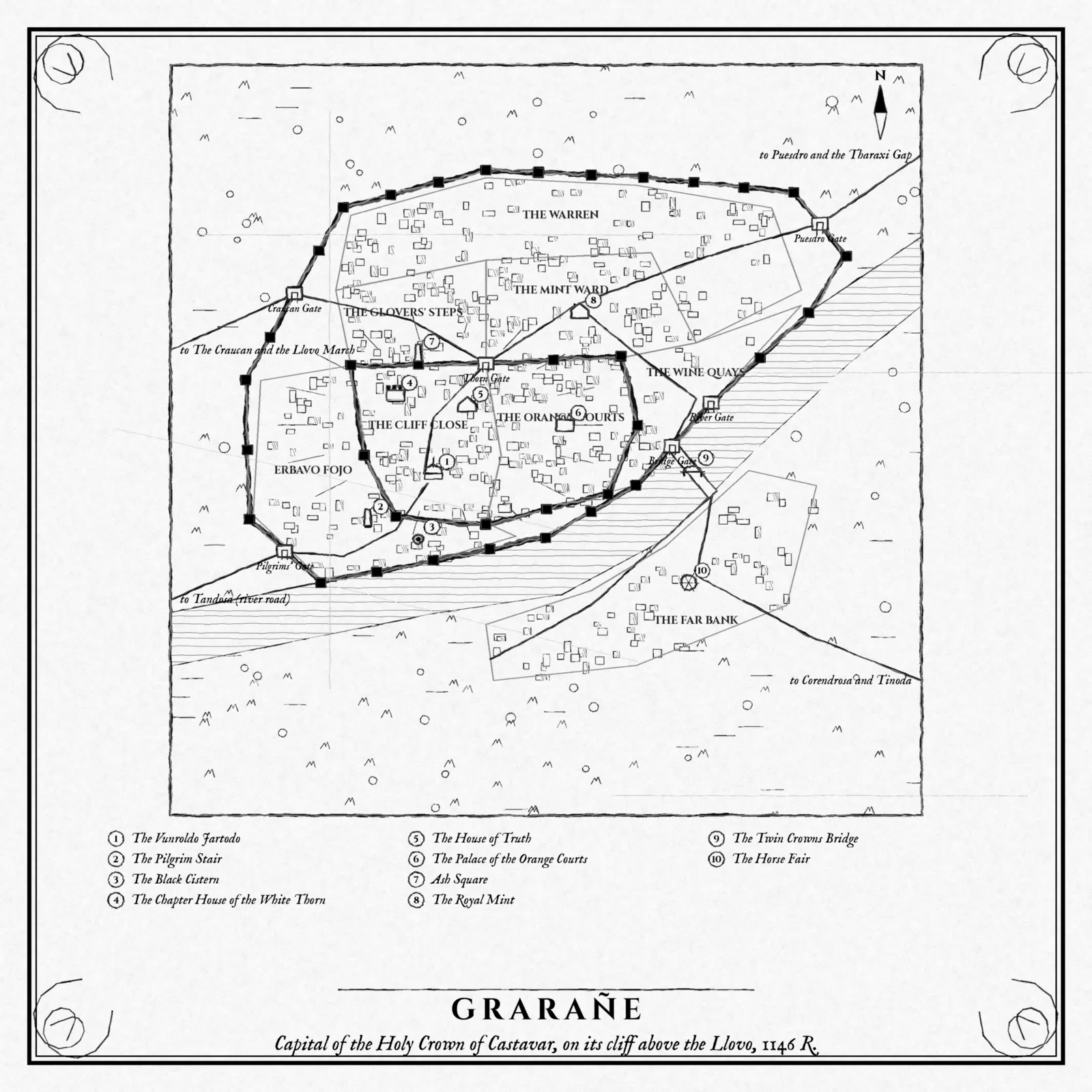
Come up the Llovo from the west and you see the cliff first. It rises out of the cork-oak country, a wall of pale rock above a bend in the river, and on its summit stands the Vunroldo Jartodo, the cathedral-fortress, whitewashed so bright that at noon it hurts to look at. Storks stand on its towers. Below it the rock face is crusted with houses, chapels and cave-mouths, all joined by one zigzag stair, and at every hour of the day pilgrims climb that stair with their hats in their hands. The city's name is only the Castavari word for cliff, and nobody who has seen it asks why.
Tandosa
Tandosa smells of fish before it can be seen. The road from Sonvera comes over the last dune through umbrella pines, and below lies the mouth of the Llovo, brown water pushing into green sea, with a harbor full of masts on the near bank. The high-castled galleons of the only ocean-going navy on Aethorra lie along a stone mole with their bolt-throwers shrouded in sailcloth. Gulls fight over the sardine barrels, dolphins roll in the harbor mouth, and on every roof in the fishing quarter octopus hang drying on lines like washing.
Other towns and strongholds: Tinoda, Sonvera, Puesdro, Corendrosa, Cluvedo. Every town on the continent →
Great Houses and Armsmirelre
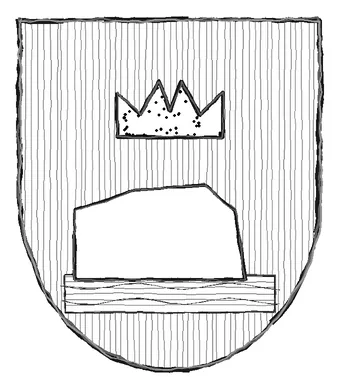
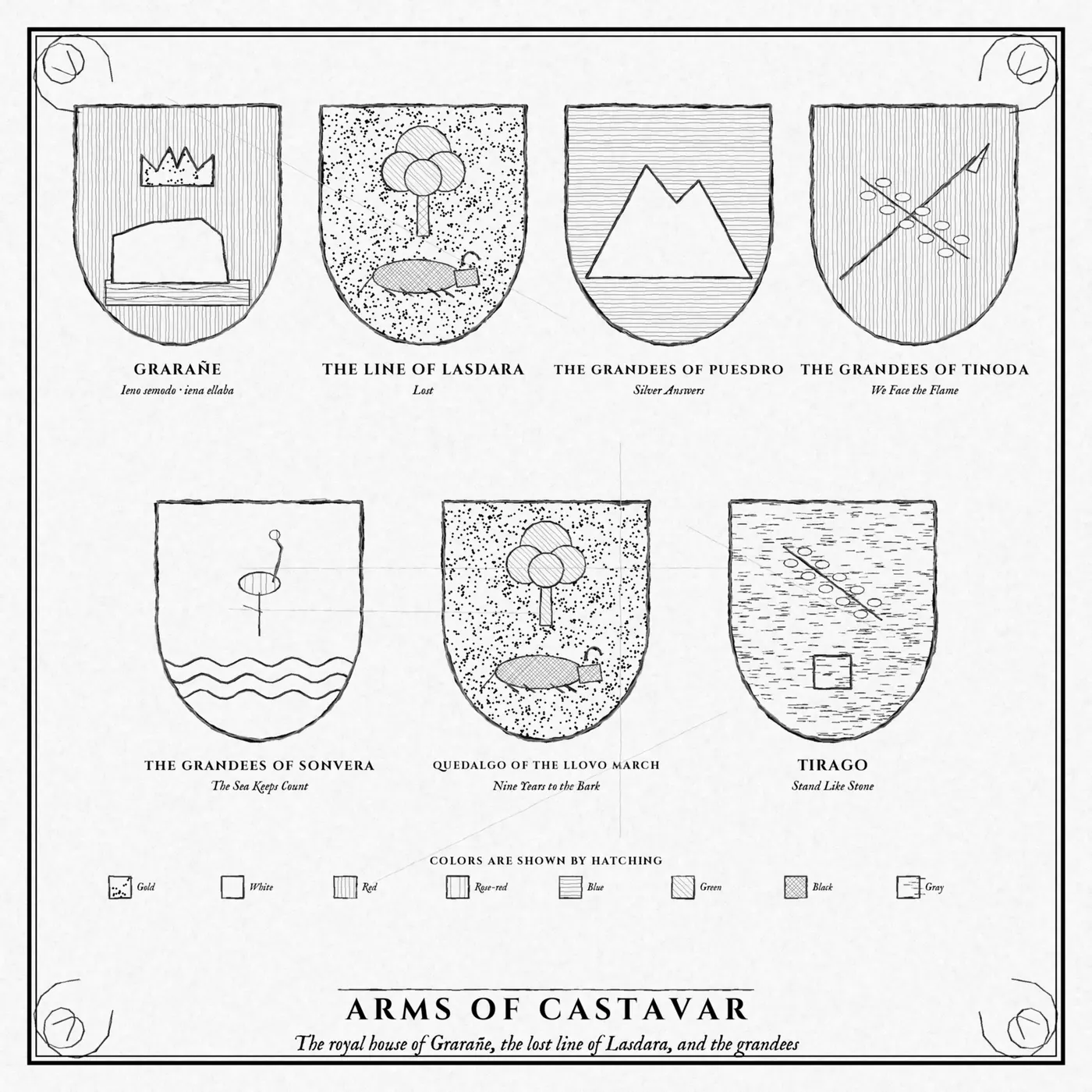
Grarañe
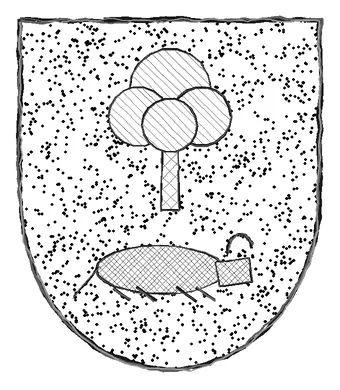
The Line of Lasdara
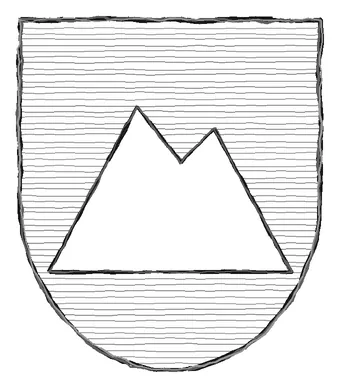
The Grandees of Puesdro
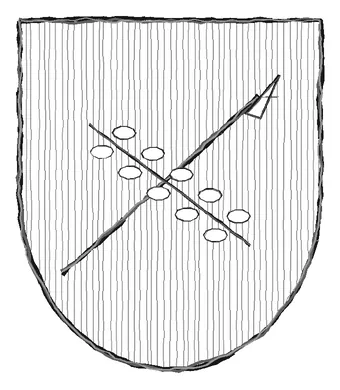
The Grandees of Tinoda
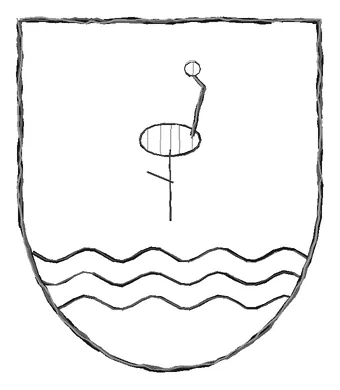
The Grandees of Sonvera
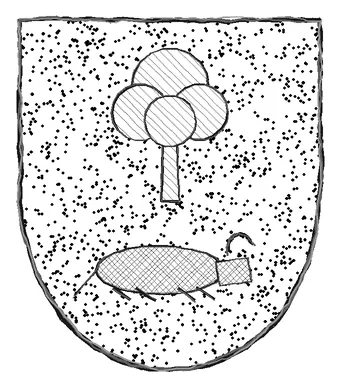
Quedalgo of the Llovo March
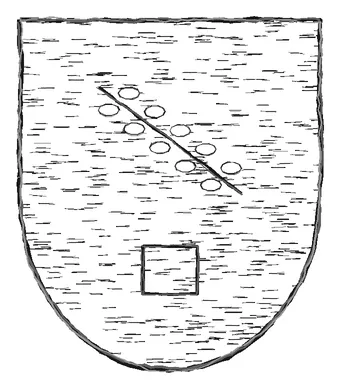
Tirago
The houses in full: descent, heads, heirs, feuds
Succession law
The crown passes in the male line. Castavar remembers that Lasdara ended in 301 when its male line died out. A Grandee's lands pass whole to his eldest son, and younger sons go to the church or the knightly orders. Commoners divide their land among their sons and give their daughters dowries. The Berrode does not undo a marriage; a church court may part a couple, but neither may marry again. The church has decided who rules before now. The Rislo holds a veto over matters of faith, and in 983 Rislo Gronrovo imprisoned King Janedo IV and ruled through the king's twelve-year-old son for eleven years.
The ruling house: Grarañe
text
The Twin Crowns of Castavar and Lasdara (before the Reckoning)
│
├── THE LINE OF LASDARA, junior crown; male line ended 301, the kingdom absorbed
│
└── HOUSE GRARAÑE
     ⋮
     ├── Clislo II, killed by a thrown spear at the Battle of the Gap, 212
     ⋮
     ├── Llelilo the Pious, died of thirst on the First Crusade, 701
     ⋮
     ├── Mairo II, captured at the Salt Pans, 868; ransomed for his weight in silver
     ⋮
     ├── Janedo IV, imprisoned by Rislo Gronrovo, 983
     │     └── (his son, unnamed, twelve in 983, through whom the Rislo ruled eleven years)
     ⋮
     └── Randuo V, died 1138
          │
          └── Dobarmo IV, born c. 1111, crowned 1138  ═══  Rorelle diol Valcroix   (1135)
               │
               └── two sons, unnamed; the elder is heir
The Rislon of the chronicles: Cravio of Grarañe, the first, 655; Pueco, 866; Gronrovo, 983; Litoto, in office in 1146.
- Seat: The Palace of the Orange Courts, Grarañe (
grarane); the Royal Demesne (royal-demesne-of-grarane). - Arms: The realm's arms are House Grarañe's quartered with the Berrode: a crown, the cathedral-fortress, the ring of the White Thorn and the ocean fleet, with two lances for supporters. The house's own arms are the first quarter: a gold crown standing on a white cliff above a blue river. Grarañe is the Castavari word for cliff.
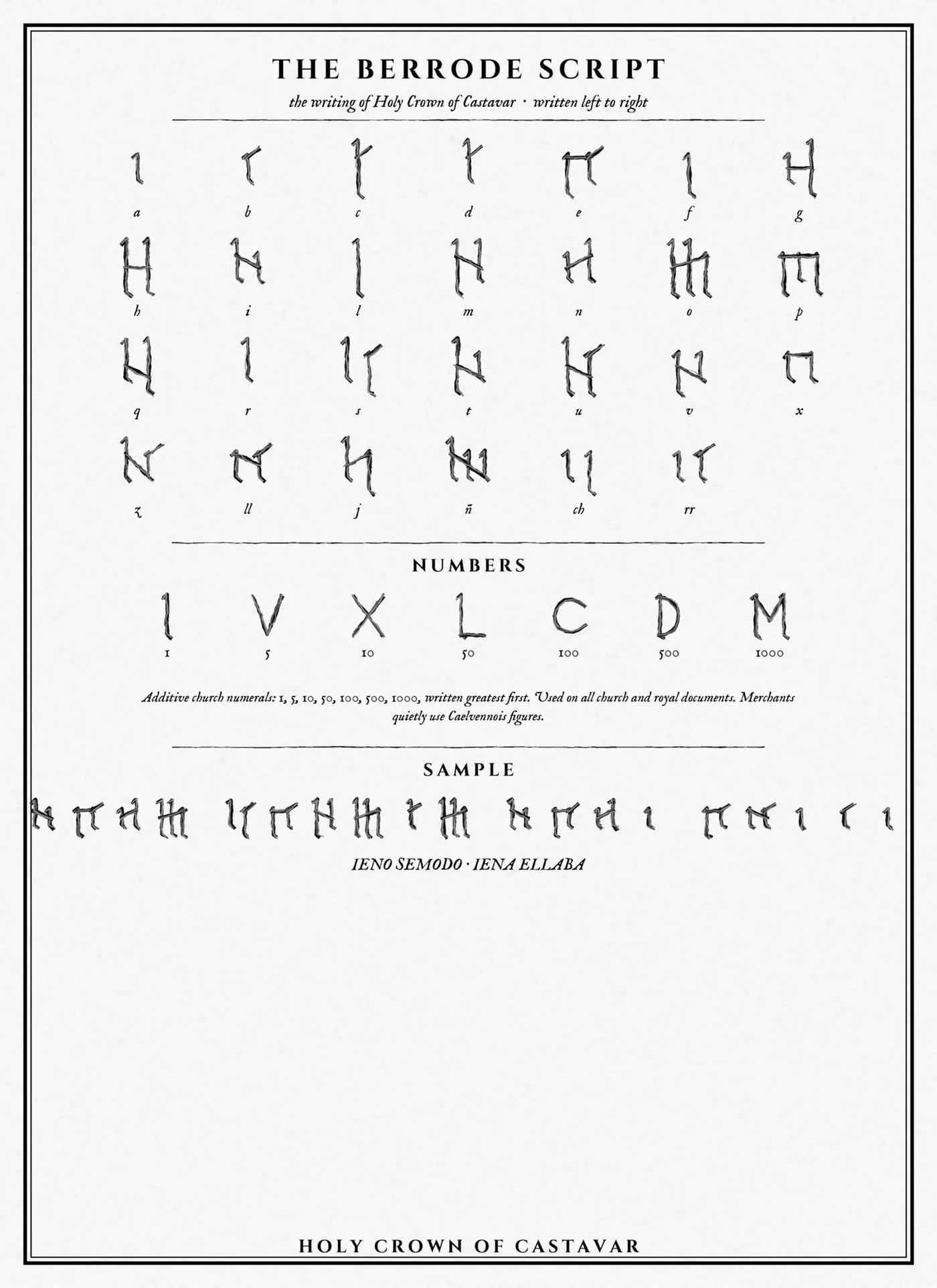
- Words: IENO SEMODO · IENA ELLABA, "One God, one crown."
- Head: King Dobarmo IV deso Grarañe (35), who wears a glove over his burned right palm and takes it off to pray.
- Heir: The elder of his two sons by Queen Rorelle, a boy of no more than ten.
- Wealth and power: The crown holds the Royal Demesne, the Royal Mint and its royal fifth of the Grandees' silver, the tuna, which is the crown's alone, and the navy. Against that it owes Farisel 4,800,000 leusores, half its income goes in interest, and the Grandees voted no grant in 1146.
- Allies and feuds: The crown is bound to Caelvenne by the Gilded Pact. The Rislo sits at the king's right hand. The Crownmen of Grarañe name Dobarmo their head, and he has never led them.
- History: Within a generation of Fojo's Hearing in 312 the kings took up the Solitary God and outlawed the older gods. The city says Mairo II's ransom in 868 was weighed on the Royal Mint's great scale. Dobarmo IV was crowned at 27 in 1138, and the Third Crusade burned at Faashab-Talodin the next year.
- Hooks: Brother Talvo has a file on the queen that he has not yet opened. At the last service on Fojiga the king left his glove off all the way to the palace. The coming year will settle who rules Castavar, the crown or the cliff.
- Direction: CONTESTED.
The Line of Lasdara (vanished)
- Seat: The old Lasdara country, now the Berrode's southern diocese (
lasdara-country). - Arms: On gold, a green olive tree with a black bull lying beneath it. The palace hangs this banner beside Castavar's on the fourth Accord Day.
- Words: Lost.
- Head: None since 301.
- History:
- 301 — The male line dies out. The name lives on only in the church's southern diocese.
- Hooks: The olive and the bull on the old banner are two of the gods the Grove of Lasdara still keeps, and the Office of Truth has noticed who looks longest at the banner on Twin Crowns' Day.
- Direction: VANISHED, though the Grove villages may become a people of their own if Castavar breaks.
The Grandees of Puesdro
- Seat: The Silverhead Mines (
silverhead-mines), with town houses in Puesdro (puesdro), whose business their stewards run under the crown's governor. - Arms: On blue, a silver mountain with three black mine-mouths.
- Words: Silver Answers.
- Head: The Grandee of Puesdro, first among the mine-holding Grandees.
- Heir: His eldest son, by law.
- Wealth and power: The Silverhead Mines yield about sixty tons of silver a year, and their Grandees pay the crown a fifth in ingots. The Upland Shepherds pay them a sheep in ten.
- Allies and feuds: The house is the heart of the Old Jevarrie. Rislo Litoto has proposed seizing the mines "for God" to pay for the Fourth Crusade, and the house is looking for friends among the Crownmen. The Gap Wardens say half their number are bastards of the silver country's masesben.
- History:
- 752 — Silver is found above Puesdro.
- 1068 — A Castavari silver venture collapses and takes the House of Tésvol with it.
- Hooks: Binto the Weigher has been summoned to the Rislo three times with the mint's full accounts.
- Direction: CONTESTED.
The Grandees of Tinoda
- Seat: The almond orchards around Tinoda (
tinoda), with town houses inside its walls. The city itself is the crown's, under a royal governor. - Arms: On red, a white almond branch in blossom crossed with a lance.
- Words: We Face the Flame.
- Head: The Grandee of Tinoda, first of the orchard Grandees.
- Heir: His eldest son.
- Wealth and power: The house lives on almond orchards and a share of the road through Cluvedo and Daalher, where Castavari silver and wine go into Zarvand.
- Allies and feuds: The house is Ecclesiast by habit. Every crusade marches through or past its land, and it has buried more sons than any house in Castavar.
- History:
- 699–701 — The First Crusade dies in the Sunmaw beyond its border.
- 1139 — Its knights ride with the Third Crusade.
- Hooks: Zarrit the Money-Changer in Mazbaaran has changed more Castavari silver this year than in five, much of it by the Tinoda road.
- Direction: FADING.
The Grandees of Sonvera
- Seat: The rice marshes and salt lagoons of Sonvera province (
sonvera-province), with a town house in Sonvera (sonvera), which the crown rules through a governor. - Arms: Blue and white waves, with a pink flamingo standing on one leg.
- Words: The Sea Keeps Count.
- Head: The Grandee of Sonvera.
- Heir: His eldest son.
- Wealth and power: The house holds Sonvera rice, salt lagoons, and a coast that faces the Shattered Isles across open water.
- Allies and feuds: The house is Vinvelon: Castavar is a sea power, not a desert one. It hates the Salt Brotherhood in public and buys its prizes back in private.
- History:
- 410–415 — The Salt Wars destroy Vexara, off Sonvera's coast.
- Hooks: Lonre of the Long Reach, a Brotherhood captain, is Sonvera-born, and the Grandee's household knows her mother.
- Direction: RISING.
Quedalgo of the Llovo March
- Seat: The Llovo March (
llovo-march), with the Craucan stud (the-craucan). - Arms: On gold, a green cork oak with its trunk stripped red, and a black bull lying beneath it. Quedalgo is the Castavari word for ox.
- Words: Nine Years to the Bark.
- Head: Vaugenco the Bull-Lord, Grandee of the March, a big, pious man of about sixty who has never missed a bull-run.
- Heir: His eldest son.
- Wealth and power: The house lives on cork, black Llovo bulls, cork-hill hams, and the Craucan's destriers. A trained destrier is sold only with a Grandee's letter, and in the March the letter is Quedalgo's.
- Allies and feuds: The house is Old Jevarrie. Half the villages on Quedalgo land keep the Grove at night, and Vaugenco has chosen not to know.
- History:
- 312 — The older gods are outlawed. The March's bull-runs live on under a church calendar.
- Hooks: When the bull-run in a Quedalgo town kills the bishop's nephew and the crowd cheers, the Office of Truth demands the runs be banned, and Vaugenco demands they go on.
- Direction: CONTESTED.
Tirago
- Seat: A tower near the fort of Corendrosa (
corendrosa), in the Royal Demesne. - Arms: On gray, a white hawthorn sprig above a square gray stone.
- Words: Stand Like Stone.
- Head: The Grand Master's elder brother (unnamed), head of a masesben family of the Demesne. Its best-known son is Grand Master Arsoso Tirago of the White Thorn (53), a younger son who went to the orders, as younger sons do.
- Heir: The elder brother's eldest son.
- Wealth and power: The family has little land and great honor. The Grand Master commands the Order of the White Thorn.
- Allies and feuds: The Grand Master is an Ecclesiast by duty, and he calls the Office of Truth cowards with candles.
- History:
- 1139 — Arsoso Tirago fights in the Third Crusade and buries most of his friends in the Sunmaw.
- Hooks: A Dunmorrow wagon under guard carried plate armor and a note into the White Thorn's chapter house.
- Direction: STABLE.
Castavar's nobility is CONTESTED. The Grandees are richer than their king, the church wants their mines, and the Old Jevarrie may find it has a spine after all.
Faith, Myth and Folklorellelila
Myths
Fojo and the Silent Voice. Fojo of the Llovo, a goatherd, climbed the cliff at Grarañe in a storm to save a kid, and heard in the thunder a voice that said noth…
Myths
Fojo and the Silent Voice. Fojo of the Llovo, a goatherd, climbed the cliff at Grarañe in a storm to save a kid, and heard in the thunder a voice that said nothing at all, and understood it. He came down knowing there was one God, that He was alone and did not speak, and that the silence was the message. Erbavo Fojo's cliff is the cathedral's footing. The Berrode calls this the First Hearing. The Grove says Fojo was struck by lightning and the goat came down alone.
The Bull of Lasdara. The Grove's oldest story: the land itself was a bull the first people rode, and when they tamed it, the bull agreed to feed them if they would let it run wild one day a year. The bull-runs on the saints' days are, under the paint, that promise being kept. The Berrode has spent eight centuries not understanding what it is blessing.
The Silver That Fell. The silver of Puesdro is said to be the tears of the angels who wept when the Solitary God made the world alone. Miners say the veins run toward Grarañe because the angels were looking at the cliff. Zarvani scholars say silver runs where the rock cooled. Both may be true.
Folk tales
Llelilo's Last Drink. King Llelilo the Pious, dying of thirst in the First Crusade, was offered water by a Zarvani boy and refused it as the gift of an idolater.
Folk tales
Llelilo's Last Drink. King Llelilo the Pious, dying of thirst in the First Crusade, was offered water by a Zarvani boy and refused it as the gift of an idolater. The Berrode tells it as a tale of faith. The taverns of Tandosa tell it as a tale about a fool, and about the boy who drank the water and lived.
The Knight and the Thorn. A knight of the White Thorn fell in love with a Grove Masker's daughter and wore a hawthorn from her father's tree in his helm for thirty years without knowing what it was. The Order says the story is false. Every squire knows it.
Two-Fathom's Foot. A Tandosa tale, told with relish, of how a Salt Brotherhood quartermaster lost his foot to a Castavari bolt-thrower and had a wooden one made from the bolt. The Brotherhood tells the same story, and it ends the same way. It is the one joke both coasts share.
Old wives' tales
Old wives' tales
- A stork that leaves a church tower before spring means the bishop has sinned.
- Never say a heretic's name after dark; the Office of Truth hears through the walls, and so does the heretic.
- Olive oil that goes cloudy in the jar means someone in the house has lied to a priest.
- A destrier that will not cross the Llovo is carrying a rider who will die in the Sunmaw.
- A child born with a mark shaped like a thorn will join the Order or burn; the midwives decide which by whether they tell the priest.
- Grove wives say: do not pour wine on the ground on the saints' days unless you mean it for the bull.
Traditions
Traditions
- The Glove. Every Castavari who has been burned in war wears a glove over the scar and takes it off to pray. The king's is the best known but not the first.
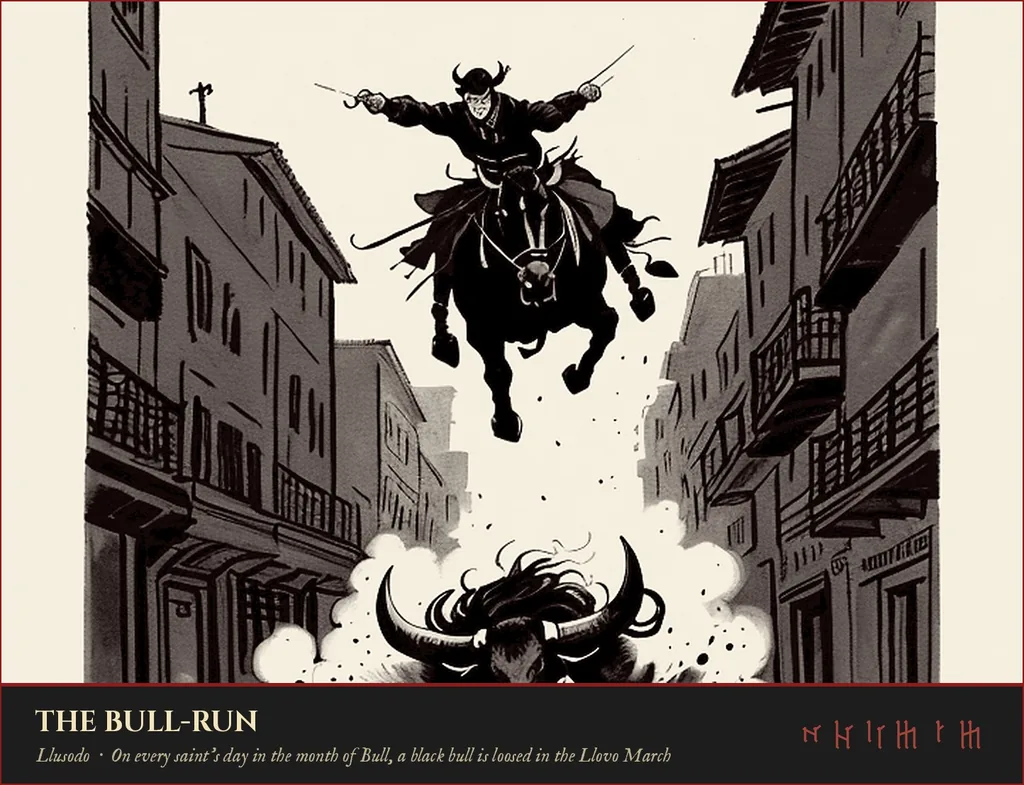
- The Bull-Run. A black bull is loosed through the streets on the saint's day, and young men run before it. The church calls it a penance. It is older than the church.
- Salt Swearing. Every sailor of Tandosa swears his first oath on a cup of seawater, and the priest present looks the other way.
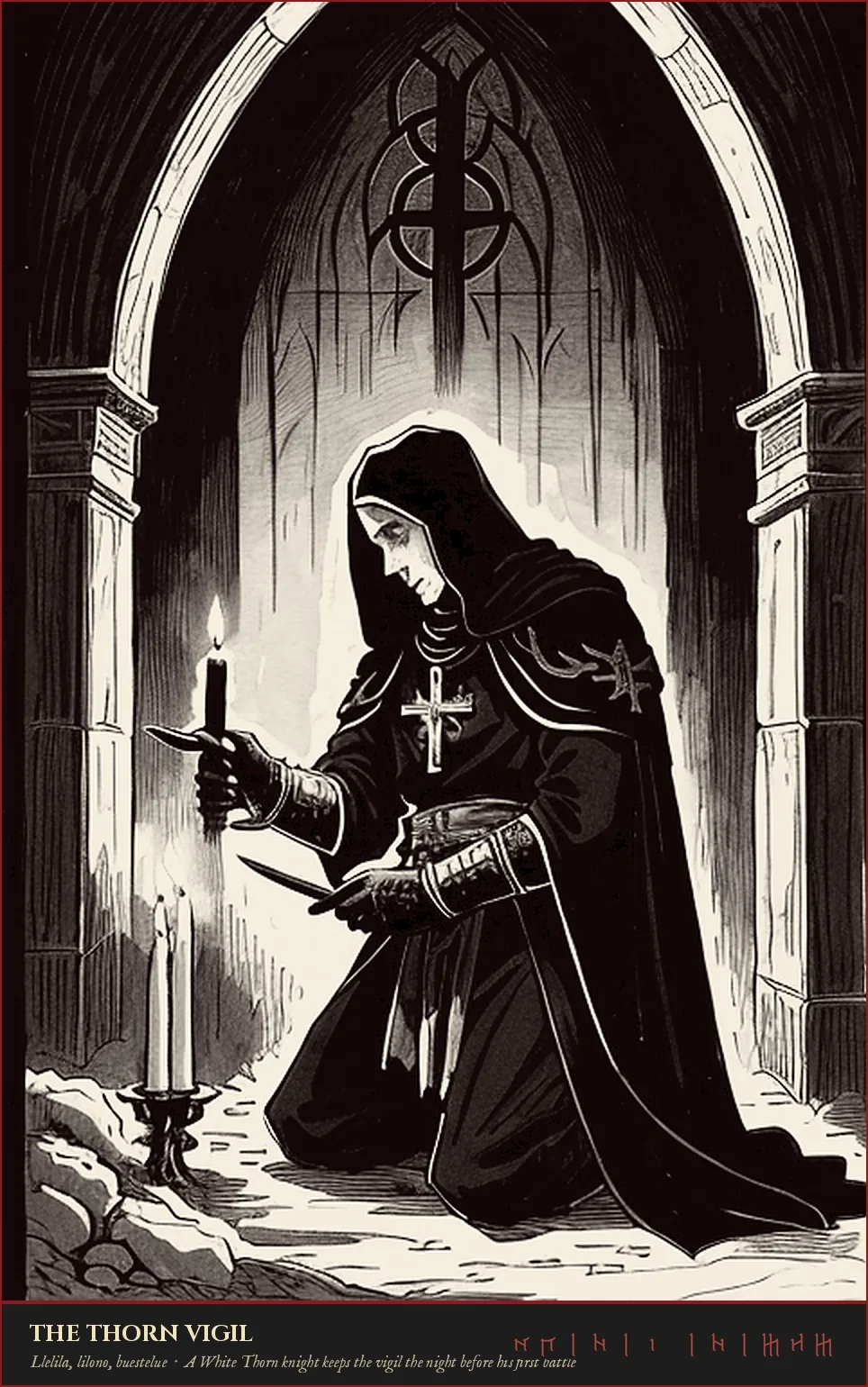
- Thorn Vigil. A knight of the White Thorn spends the night before his first battle kneeling in a hawthorn grove with a branch across his knees. If it flowers by dawn, he will live. In spring they usually do.
Law and Daily Lifemoñiltue
Courts, crimes, marriage, food, dress and a day in Castavar
Law
The king makes Castavar's law with the Grandees, who vote him money in the Jevarrie, and the Rislo holds a veto over matters of faith, which he reckons broadly. The king's courts hear property, debt and violence. The church's courts hear sin, marriage, oaths and heresy, and heresy goes to the Office of Truth, which can take a prisoner out of the king's own cells. The Grandees judge their own lands in everything short of death, and the Upland Shepherds cannot be arrested on the drove-road.
The watch is drawn from the ratorlon of the garrisons, who walk in pairs and keep out of the poor quarters after dark. The Office of Truth needs no watch. It pays informers. Punishment follows rank: a laborer who steals is flogged, a lesser noble is fined, and a Grandee is invited to lend the king money.
| Crime | Usual punishment |
|---|---|
| Theft by a commoner | Flogging in the town square |
| Theft by a masesben | A fine |
| Clipping jabirga | Branded on the hand; a second offense is hanged |
| Selling Zarvani poppy | Flogging, and the poppy burned |
| Keeping or copying star tables | The tables burned, and a fine; navigators are rarely charged |
| Murder | Hanging for a commoner, the sword for a noble |
| Blasphemy | A brand on the forehead, the Office of Truth's mark |
| Heresy, Grove masks, preaching the One Light | Burning; in Grarañe, in Ash Square |
Unhearing and outlawry. Short of the fire, the church's heaviest sentence is to declare a person unheard. An unheard man may not marry, swear an oath, stand as a witness or be buried in the church's ground, and whoever helps him shares his sentence. The crown outlaws bandits in the Upland, and any man may kill an outlaw found on the king's roads.
Debt. The Berrode calls lending at interest between believers a sin (talue), so Castavari borrow from Caelvennois, and that is how the crown came to owe Farisel. A peasant owes his Grandee's granary for seed and bread, and the debt passes to his sons. A masesben who cannot pay pawns his land to the lenders of the Mint Ward.
Family
Marriage and divorce. Marriage belongs to the church courts. It is made before a priest in silence, the vows spoken into the quiet the way Fojo heard his God. No weddings are held in Litota, and many are held at the Feast of Grace that ends it. Marriages are arranged on the evening walk, and a noble daughter marries where her father's treaties need her. Queen Rorelle married at seventeen to seal the Gilded Pact. The Berrode does not undo a marriage. A church court may separate a couple for cruelty or heresy, but neither may marry again while the other lives.
Inheritance. A Grandee's lands go whole to the eldest son, and younger sons go to the church or the knightly orders. Commoners divide land among their sons and give their daughters dowries. The crown passes in the male line, and Castavar remembers that Lasdara ended in 301 when its male line died out.
Women. A Castavari woman lives under her father's law and then her husband's, and may not be a priest or sit in the Jevarrie. Women still rise, by the sea, by widowhood and by faith. Captain Modarsa Tandosno commands the navy's best galleon, and the widows of the Third Crusade hold their own property for the first time in their lives.
Who is not free. Castavar holds no one as property, and its peasants are free in law. In truth most owe their Grandee a year's harvest, a son for the ratorlon, and their silence.
Children and schooling. About one Castavari in seven can read, nearly all of them clergy or nobles, taught in the cathedral schools and the orders' colleges. The navy's pilot school at Tandosa teaches boys of twelve from Zarvani star tables bound inside approved covers. Everyone else learns from the pulpit, and pays a Market Hand scribe to write a letter.
Daily life
Food and drink. Castavar eats from the olive, the vine and the pig. In Litota it eats no meat at all.
| A Grandee in the Orange Courts | A glover on the Glovers' Steps | A peasant of the Royal Demesne | |
|---|---|---|---|
| Morning | Bread, olive oil, bitter-orange preserve | Bread and olive oil | Bread dipped in oil, a handful of olives |
| Midday, before the heat | Cork-hill ham, roast kid or Upland ibex, Sonvera rice with almonds, Llovo red | Chickpeas with rabbit, bread, red wine cut with water | Chickpeas, bread, wine cut with water |
| Evening | Llovo barbel, cheese, Tinoda almonds and honey | Salted sardines, bread, olives | Rock rabbit if one was trapped, bread, onions |
On the coast the daily meal is sardines, dried octopus and bread, and spring tuna is for feast days.
Dress and houses. Castavari wear dark wool and linen, the pious wear black on Fojiga, and knights of the White Thorn wear Rosemary of the Thorn in the helm. Every Castavari burned in war wears a glove over the scar and takes it off only to pray. Houses are whitewashed stone or adobe under red tile, built around a courtyard with a well or cistern.
Health and hygiene. Castavar had physicians once, and burned or lost most of them. The knightly orders keep infirmaries for their own men. The poor go to herb-women with Upland thyme, rosemary and thyme-hill honey, and the Office of Truth watches the herb-women. Zarvani medicine is smuggled in wine barrels, and the Sunmaw poppy is against the law. A pious Castavari washes his hands at the cistern before prayer. In the Warren of Grarañe the best-known midwife is Randue the Midwife (randue, "safe"). She has delivered half the quarter, and by what she tells the priest, she decides which thorn-shaped birthmarks are worth reporting.
Birth and death. A child is named at the first service of Fojiga after its birth. The priest says nothing, and the family speaks the name into the silence. The dead are buried in the church's ground after a vigil without music. A family whose son never came home from the Sunmaw hangs his empty glove by the door.
Pastimes. Castavar amuses itself with sermons, processions, horse-racing, dice and gossip. In Llusodo the young men run before the black bulls of the Llovo March, and in Litota there is no music on any day.
A day. The bells ring before dawn and business is done by noon. The towns shutter through the heat and wake for the evening walk, when marriages are arranged and informers take notes. The week runs from Ieno to Fojiga, the day of silence.
Where it is going: CONTESTED. Castavar's law has two masters, and in 1146 the church is winning. The Rislo wants the Grandees' mines for the Fourth Crusade, and the Office of Truth can overrule the king's cells. If the Old Jevarrie and the Crownmen join, the king's courts may win back their ground. If they do not, the Office of Truth will be the law.
Trade, taxes and money
Makes and sells. Silver, some sixty tons a year, more than every other realm together; olives and oil, Llovo red, cork, merino wool, hams, destriers, almonds, rice, lagoon salt, sardines, octopus and tuna.
Buys. Credit, until this year; Dunmorrow armor; Caelvennois clockwork arbalests; Zarvani star tables, in secret; timber for masts.
Taxes. - The royal fifth: the Grandees who own the mines pay the crown a fifth of their silver in ingots at the Royal Mint, about 96,000 larrama a year. - The mint charge of one part in twenty on all silver struck. - The Mouth duty at Tandosa: one part in fifteen on everything loaded for the sea. - The Jevarrie's grant, the sum the Grandees vote the king when he summons them. In 1146 they have voted none. - The spring tuna, which belongs to the crown alone; a larrama on every destrier sold at the Horse Fair. - The Church takes a tenth of every harvest and shares none of it. The Upland Shepherds pay the Grandees a sheep in ten and the king nothing.
Direction. CONTESTED. Castavar strikes more silver than anyone and keeps less of it than anyone.
The Year in Castavarvasema
Months. The church's months: Llusodo (bull), Lasdalo (grove), Rarveñe (flower), Vasborno (sun), Plune (field), Nirlona (grain), Larronlo (wine), Bussirje (olive), Corenva (hawthorn), Fojiga (silence), Litota (penance), Besriete (grace). The first two, "bull" and "grove," are older than the Berrode, and so are the rites kept in them.
Week. Seven days: Ieno, Bavo, Trado, Gova, Pemo, Sovo (one to six) and Fojiga (silence), the Solitary God's day, when the Berrode's services are held without music. The week runs straight on through the months and the Accord Days.
Years. Years of Grace, from Fojo's Hearing in 312 R. The crown writes both: the 835th year of Grace, 1146 of the Reckoning. The Berrode writes only the first.
Festivals:
- The bull-runs (saints' days in Llusodo). In the Llovo March a black bull is loosed through the streets on every saint's day, and the young men run before it. By a chance the Berrode has never looked into, every saint's day in the Llovo March falls in the month called Bull, in early spring, when the Grove of Lasdara says the land was first let run wild.
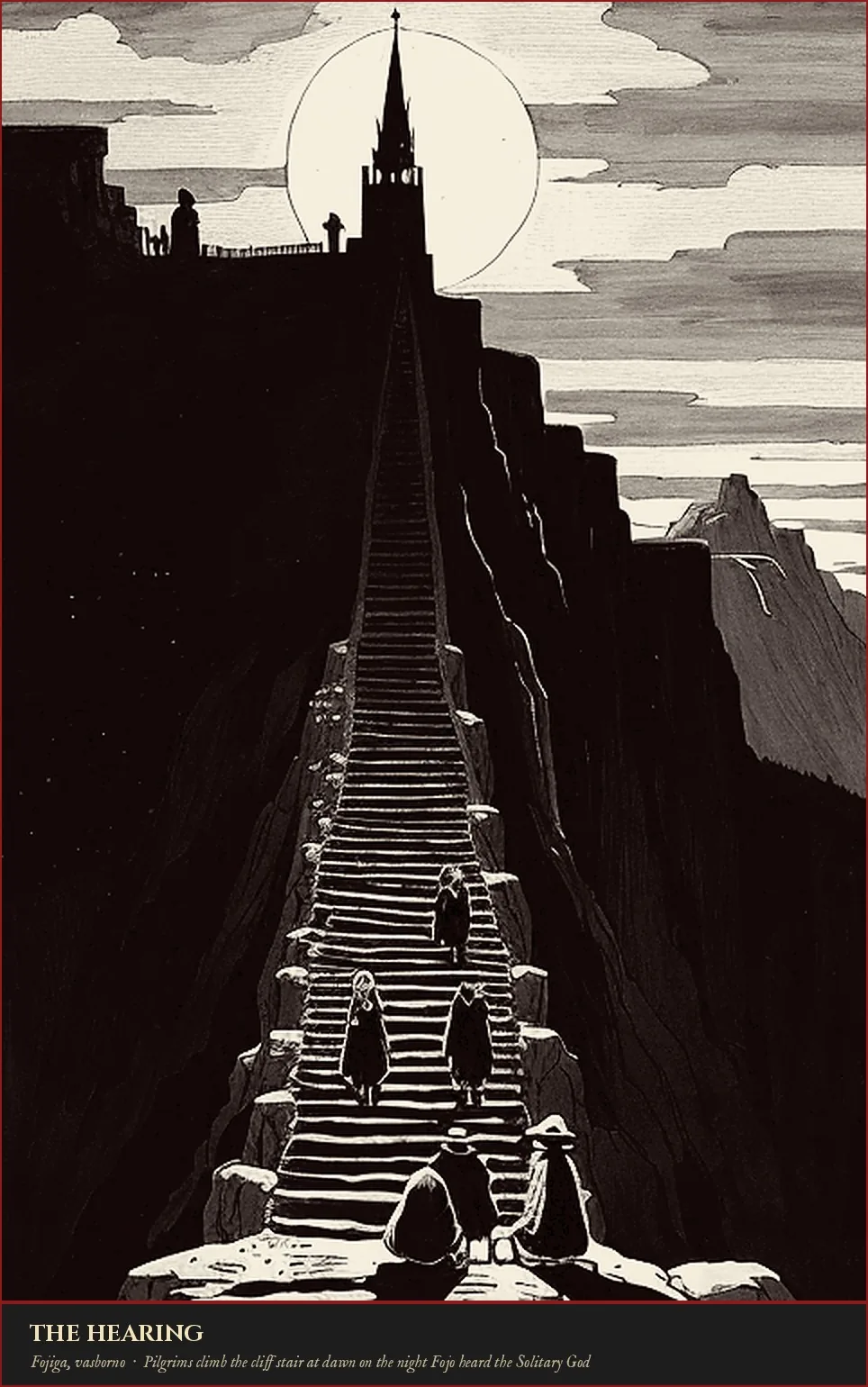
- The Hearing (the longest night, 6th of Fojiga). The Berrode keeps the night Fojo of the Llovo heard the Solitary God on the cliff above Grarañe. Pilgrims climb the cliff stair at Erbavo Fojo at dawn. It falls on the same night as Aldmere's Quiet Hearth, which is why the Berrode has tried to condemn the one and failed.
- Litota (the Eleventh Month). The Berrode's month of penance: no meat, no weddings, no bull-runs, and no music on any day.
- The Feast of Grace (30th of Besriete, the last night of the year). Penance ends, and it is the one night the whole realm eats together.
- The Thorn Vigil has no date. A White Thorn knight keeps it the night before his first battle. The order likes to march in spring, when the hawthorn is mostly in flower. A knight whose first battle falls in Corenva, the hawthorn month, when it has no flowers, is pitied.
Speak Castavarisosmima
| Castavari | English |
|---|---|
| Jole jilma vuso. | May He keep you. (Greeting and farewell. "He" is God, never named: the pronoun is capitalized in writing and followed by a pause in speech.) |
| Cuso tilra ule dallatie? | Where is the port? |
| Nevo cruechemo. | I don't know. (The verb ending shows who; the pronoun is dropped.) |
| Cusa tadue? | How much? |
| Ieno Semodo, iena ellaba. | One God, one crown. (The motto.) |
| Vuso besriete. | Your grace. (To nearly anyone above you, which in Castavar is most people.) |
| Totue oe corenva. | Blood and thorn. (The oath of the White Thorn.) |
| Traila ule llusodo! | Let the bull run! (The saint's-day cry, and the Grove's.) |
| Luenlomo. Luenlevomo. Luenleriomo. | We pray. We prayed. We will pray. |
| Duedeta rarivo? | Do you have bread? (A yes-or-no question is a statement with a rising voice.) |
| Ule llusodo drosdo; ula ellaba drosda | The white bull; the white crown. (The adjective follows the noun and turns -o to -a for a feminine noun.) |
| Castavari | English |
|---|---|
| narnue | person |
| nemasmo | father |
| ginte | husband |
| firanvo | king |
| folorto | farmer |
| vasborno | sun |
| vojo | wind |
| gito | lake |
| corbiema | wood (material) |
| velojie | town |
| goche | door |
| feliele | day |
| plolve | spring |
| rarivo | bread |
| larronlo | wine |
| voge | dog |
| nevisa | bird |
A Thousand Yearsgindenmue
| Year | What happened |
|---|---|
| 0 R. | The Accord of Surmave. The six surviving great powers and the Tharaxi sign the Accord on an island in Lake Surmave, fixing borders and founding the calendar: Vareth, Wessary, the Marrowmere League, the Twin Crowns of Castavar and Lasdara, the Sarvani Khaasarate, the Three Thrones of the East, and Tharax. Hrodvald sends no envoy and signs nothing. |
| 206–212 R. | The War of the Gap. The War of the Gap. King Clislo II of Castavar-Lasdara marches an army of 40,000 through the Tharaxi Gap to seize the Heartlands' western grain lands. Tharax refuses passage. |
| 212 R. | The Battle of the Gap. The Battle of the Gap. Four thousand Tharaxi Phymun under King Tothakhor Deneskid hold the pass for three days against ten times their number. Clislo II is killed by a thrown spear on the third day. Castavar retreats. The battle makes Tharax's reputation; no army has forced the Gap since. |
| 255 R. | The Marrowmere Wars begin. The Marrowmere Wars begin. The League cities fight each other over lake tolls for forty years, hiring Hrodvald raiders, Tharaxi spears and Castavari knights by turns. |
| 289 R. | Larrona of Lasdara marries Khaasar Hoonneer. Princess Larrona of Lasdara, of the junior line of the Twin Crowns, marries Khaasar Hoonneer of Zarvand. The Daalher road opens to Lasdaran wine. After 312 the Berrode declares the marriage's children idolaters, and after 301 Castavar ignores the Zarvani line's claim on Lasdara, which the House of Salestaad has never pressed. |
| 301 R. | Castavar absorbs Lasdara. The Kingdom of Lasdara, junior partner in the Twin Crowns, dies out in the male line. Castavar absorbs it. The name Lasdara survives only in the church's southern diocese. |
| 312 R. | The Founding of the Berrode. The Founding of the Berrode. A hermit-preacher named Fojo of the Llovo proclaims the Solitary God at Grarañe. Within a generation the Castavari kings adopt the faith and the older gods of Castavar are outlawed. Fojo is later canonized; Erbavo Fojo is named for him. |
| 367 R. | The Lake Comet. The Lake Comet. A comet hangs over Lake Surmave for forty nights. Sun-priests of Caelvenne declare it a sign of the Radiant Iévaine's favor. The Berrode of Castavar declares it a warning. Both build cathedrals. |
| 410–415 R. | The Salt Wars. The Salt Wars. Castavar's ocean fleet destroys the island kingdom of Vexara † in the Shattered Isles, whose kings had preyed on Castavari shipping for two hundred years. The islands are never settled by Castavar; the survivors become the Salt Brotherhood. |
| 555 R. | The Kingdom Under the Spine falls. The Kingdom Under the Spine falls. The Dunmorrow Underking Grarg the Proud refuses to sell steel to Castavar and Aldmere unless they pay in gold. Both realms besiege the Delvers' holds together. The Dunmorrow are never conquered, but their kingdom is broken; the holds go back to being independent clans, and they sell to everyone. |
| 624–630 R. | The Hunger Wars. The Hunger Wars. Hrodvald raids, Aldmere border wars, and a Castavari invasion of Zarvand for grain that ends in the desert. It is in these years that Zarvand first uses naphtha from the Cinder Teeth seeps as a weapon: Talodin fire. |
| 626–627 R. | The Rice March. The Rice March. In the Hunger Wars, General Dezau Kyarau leads thirty thousand conscripts out of the Jade Gate to escort Kaishon's rice convoys west and collect Caelvenne's silver. At the Tontanor fords, on the League's Day of the Accord Days, his repeating crossbows kill some three thousand Aldmeri levies and Caelvennois marines who had been taking the rice; that night the steppe tribes take it. Kyarau marches home in 627 with the silver, the only Kaishoni army to stand west of the Rampart since the Emptying. In the same season the Zarvani burn a Castavari column with naphtha on the salest channels below Kebidaan, the first Talodin fire. |
| 631 R. | The Peace of the Isle. The Peace of the Isle ends the Hunger Wars. The envoys of the six signer-realms meet on the Isle of the Accord in the Accord Days, the first time since 0 R. Five terms: a signer whose army crosses a border in the Accord Days loses its chair at the Isle for seven years, and Kaishon sits out the first penalty; no realm's soldiers may seize a Qaflan wheel or a Drift keel, the Road Terms; each signer sends an envoy every year to hear the Accord read, the seed of the Sitting; grain in transit is not spoil; and a price is not an act of war. Hrodvald is not asked. |
| 641 R. | The Charter of Hearths. Aldmere's Charter of Hearths, signed by King Hethwur IV, guarantees freedom of worship in the kingdom. Refugees from the Reasoned Purge and the Berrode's inquisition settle in the Heartlands. |
| 655 R. | The first Rislo. The Berrode's first Rislo, Cravio of Grarañe, is elevated with authority equal to the king's on matters of faith. |
| 690 R. | Missionaries at Baamarsh. A Castavari fleet lands missionaries at Baamarsh. The Zarvani burn their ship. The Rislo declares Zarvand a realm of idolaters. |
| 699–701 R. | The First Crusade. The First Crusade. King Llelilo the Pious leads 30,000 Castavari across the Sunmaw toward Mazbaaran. The Zarvani refuse battle, poison the wells, and let the desert do the work. Llelilo dies of thirst forty miles from the Talodin in 701. Fewer than five thousand return. |
| 701 R. | Llelilo the Pious dies of thirst. King Llelilo the Pious of Castavar dies of thirst forty miles from the Talodin. Fewer than five thousand of his 30,000 return. |
| 712 R. | The Salt Brotherhood sworn. The Salt Brotherhood is formally sworn by the pirate captains of the Shattered Isles, with a code and an elected Captain-King. Castavar's navy has fought them ever since. |
| 734 R. | The Venei's Throat Massacre. The Venei's Throat Massacre. A Castavari logging company enters the Greenwarden through Venei's Throat with an armed escort of two hundred. None return. The Waheli leave the escort's shields nailed to the trees at the forest's edge. They are still there. |
| 752 R. | Silver above Puesdro. Silver is discovered in the mountains above Puesdro. Within thirty years Castavar mints more silver than every other realm combined. |
| 758 R. | The marriage of Gold and Silver. Infanta Marnada deso Grarañe, daughter of King Chanuo II of Castavar, marries Vorvaud diol Valcroix of Caelvenne, with the first Rislo's leave ever given for a foreign match. Castavar's new Puesdro silver is changed on Coin Row and minted through Solvaine's changers from this year; by 890 Castavar owes Caelvenne's old houses most of the ransom of 868. |
| 866–868 R. | The Second Crusade. The Second Crusade. Rislo Pueco and King Mairo II lead 45,000 Castavari by sea this time, landing on the coast near Baamarsh. They take Baamarsh and Vonteen-Shorooq, hold them for two years, and are broken at the Battle of the Salt Pans in 868, when Zarvani cataphracts charge across the crust of Lake Shorooq at dawn. Mairo II is captured and ransomed for his weight in silver. |
| 868 R. | The Battle of the Salt Pans. Zarvani cataphracts charge across the crust of Lake Shorooq at dawn and break the Second Crusade. King Mairo II is captured and ransomed for his weight in silver. |
| 892–899 R. | The Ledger War. The Ledger War. After a rotted harvest, Aldmere's Moot halves the Compact measure for 891; the Conclave calls it a breach and seizes forty grain barges and the Drift town of Threeoars at the Wenvorm mouth (the Seizure on the Mirror). Caelvenne's old houses pay Castavar's King Gaduo I to march on Zarvand for the ransom silver of 868. Aldmere, Zarvand and Tharax swear the Compact of Wrunvos in the Seventh Month: no separate peace, Aldmere grain down the Tharax road, Zarvani horse to the lake, the Gap closed to Castavar, and Tharaxi spears paid in twenty years of grain, not gold. Castavar calls it no war, because the Rislo will not call it a crusade. |
| 893 R. | The Summer at Lokon. Refused the Gap, twelve thousand Castavari sit below the pass at Lokon from the Third Month to the Seventh and go home when the Grandees' silver runs short, having fought nobody. King Kraxor Deneskid takes six thousand spears north to Aldmere by the Stair; King Sperxor Sastorid holds the Gap with the Bound rolling stones. No army forces the Gap. Tharax names the year for it. |
| 895 R. | The Battle of the Darthir. The Battle of the Darthir. Caelvenne's galleys land the Lilies, four hundred Castavari knights and two thousand hired Hrodvald crews below Wromthalm to take the Toll House. Kraxor Deneskid's Phymun meet them on the shingle in silence, and three thousand Zarvani horse archers under Khusjiraad shoot the Lilies' horses in the harbor shallows. The Lilies break, the Hrodvald reach the galleys, the Castavari knights are ransomed at fifty larrama a head. Caelvenne holds the water and never lands on it again. |
| 895 R. | The Battle of Daalher. King Gaduo I takes Daalher with sixteen thousand and burns the pistachio orchards of Kebidaan on the road east. Jaarzeb Tokunaad of Kebidaan refuses battle and cuts the water carts on the Cluvedo road with cataphracts and camel corps. Gaduo turns back at the orchards' edge with the Talodin in sight. |
| 896 R. | The Burning off Baamarsh. Castavar's ocean navy blockades Baamarsh through the summer. On a calm night in the Sixth Month the harbor's fire-boats go out among the anchored galleons with their siphons and burn nine of them: the first use of Talodin fire at sea. |
| 899 R. | The Ledger Peace. The Ledger Peace, sworn on the Isle of the Accord in the Accord Days after a year of Qaflan wheel-letters, with Kaishon's ambassador as go-between. The Grain Compact is restored word for word and the measure is to be set each New Year's Day by Moot and Conclave together; the barges of 892 are paid at the Compact price and the Drift paid a leusore a keel for Threeoars; Castavar's chair at the Isle, empty since 895 for crossing into Daalher on the Khaasar's Day of 894, stays empty to 901 and Castavar swears the Peace standing and gets nothing else; Zarvand keeps Daalher and doubles its gate; Tharax takes its twenty years of grain and resolves never to be paid in gold, a resolution kept until 1131; and the Qaflan and the Drift are given a bench in the Sitting's hall to swear the Road Terms on, which becomes the Bench of the free peoples. Princess Somith Tulvard marries Prince Corenvo of Castavar to seal it. The sentence assigning the banks of the Tsanha fords is written badly, and the War of the Tsanha Fords is fought over it in 911. |
| 960 R. | The Comet Returns. The Comet Returns. The same comet last seen in 367. Zarvand's astronomers had predicted it to the month. The Berrode bans the House of Learning's star tables in Castavar; Castavari navigators keep using them anyway. |
| 983 R. | The Rislo's Coup. The Rislo's Coup. Rislo Gronrovo imprisons King Janedo IV of Castavar for heresy and rules through the king's twelve-year-old son for eleven years. The precedent for the present Rislo's power. |
| 1068 R. | The Solvaine Bank Panic. The Solvaine Bank Panic. The House of Tésvol fails after lending to a Castavari silver venture that collapses. Farisel buys its debts at a discount. Tésvol survives as one of the Nine only by marrying into Farisel. |
| 1131 R. | The Iron Contract. The Iron Contract. Caelvenne, unable to trust its mercenaries after a Castavari company defects mid-siege in a lake-shore raid, signs a treaty with Tharax: gold every year, a Tharaxi army in return. King Kenithor signs it. King Lekakor votes against it in the Thirty and loses by two votes. |
| 1135 R. | The Gilded Pact. The Gilded Pact. Prince Lourien's niece Rorelle marries Crown Prince Dobarmo of Castavar. Farisel refinances Castavar's entire silver debt in the same week. |
| 1138 R. | Dobarmo IV crowned. King Randuo V of Castavar dies. Dobarmo IV is crowned at 27. Rislo Litoto preaches the Third Crusade at the coronation. |
| 1139 R. | The Third Crusade. The Third Crusade. Dobarmo IV, urged by Litoto and funded by Farisel, marches 35,000 through the Tharaxi Gap under safe-conduct and down the Talodin. The Zarvani meet them at the Battle of Faashab-Talodin and break the ratorlon with Talodin fire at a river crossing. Eight thousand Castavari burn or drown. Dobarmo escapes. Castavar's debt to Caelvenne doubles. |
| 1140 R. | Castavar's envoy to the Hizkari. The Hizkari raise the price of naphtha again and receive a Castavari envoy for the first time. |
| 1145 R. | The saddle on the Bench. In the Accord Days that close 1145, Sarsak Tolmar sends a rider, Kholab, to the Sitting at the Isle, the first Cherüsh envoy in six centuries. Kholab refuses the Bench and demands a chair as the Charnazin's heir; the Sitting refuses, since the Charnazin never signed the Accord. He leaves his saddle on the Bench and rides for the fords. The same Sitting hears the Khaasar's letter of 1137 read into the record without reply from Tharax, the bishop's sermon on the Fourth Crusade, and Selra Stormbrand's letter asking for the Absent Chair, answered as always. Nothing is settled. |
| 1146 R. | Now. Now. Sarsak Tolmar's riders are seen at the Tsanha fords. Litoto preaches the Fourth Crusade in every cathedral in Castavar. Farisel has stopped lending to Castavar. Prince Hethbael of Aldmere has asked his father, in front of the Moot, why Aldmere still pays interest on a loan made in 511. |
Dispatcheslarnilsa
From 1 January 2027 the Reckoning runs day by day, and news from Castavar arrives here as it happens: who rode where, who fell, who lied at council.